Tutorial

How to Track Job Applications Without Losing Your Mind

Spreadsheets, sticky notes, and browser bookmarks are not a system. Here's how to build a real pipeline that keeps you in control.

AL

Arnaud Lebon

CEO, Rolvelio · March 28, 2026

How to Track Job Applications Without Losing Your Mind

Why Tracking Matters

Without a system, you'll lose track of which companies you've applied to, what stage each application is at, and whether you've followed up. This leads to duplicate applications, missed deadlines, and opportunities lost to poor memory.

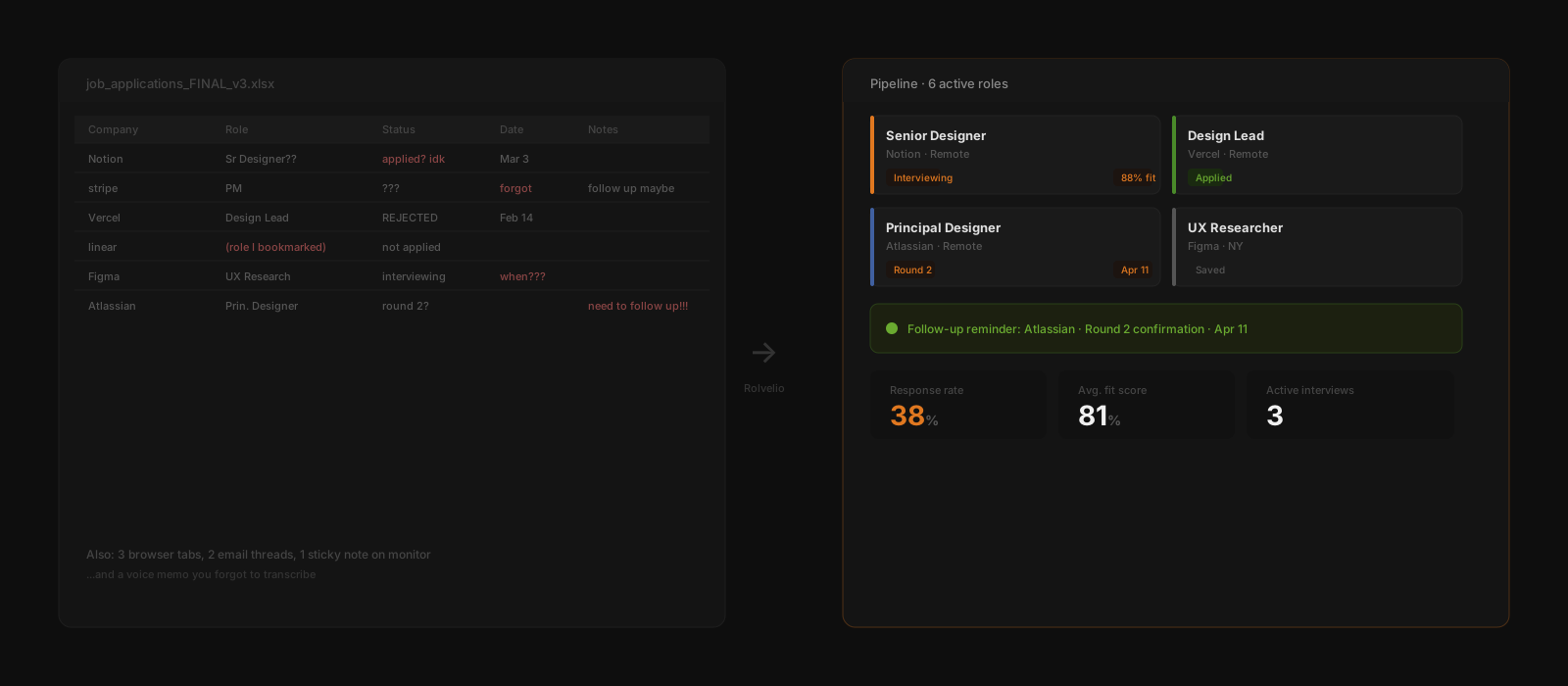
The Spreadsheet Trap

Most candidates start with a spreadsheet. It works for the first ten applications. After that, it becomes a maintenance burden, you spend more time updating the tracker than actually applying. And spreadsheets have no reminders, no stage transitions, no visibility into what needs action now.

Building Your Pipeline

A good tracking system should have four to six columns:

  • Saved, roles you've bookmarked but haven't applied to yet
  • Applied, applications submitted and waiting for a response
  • Phone Screen, initial recruiter or HR calls booked or completed
  • Interview, active interview processes
  • Offer, roles where you've received or are negotiating an offer
  • Rejected / Closed, positions to archive and learn from

What to Capture

For each application, record the company name, role title, salary range, the version of your resume submitted, the name of the recruiter or hiring manager, and when you applied. These fields give you the context to follow up intelligently and avoid sending the wrong resume a second time.